How LLMs took over the Internet, and what it means for PR and Marketing

In a few short words, Large Language Models (LLMs) took over Search because we got lazy. Rather than scrolling through a few dozen search results and critically analysing the results, we’d rather ask an LLM a question and have an answer presented to us on a silver plate.
Okay, admittedly, that’s a bit reductive. But, it’s kinda true.
A few years ago, we’d search for products or services directly via Google, where we’d be fed a comprehensive list for our perusal, gathered and listed by search algorithms. The results at the top of our screens would have been there either as a result of pay-per-click (PPC) or thanks to a business’s dedication to Search Engine Optimisation (SEO). Regardless of how it got there, we’d have the option to scroll through and pick one.
But today it’s a different story.
GEO 101
To tell the full story, we need to travel all the way back to the distant land of 2024, when Google (the world’s biggest search engine) officially started to introduce a more personalised (and summarised) offering, using AI. Facing newfound competition from AI organisations, including ChatGPT, it fundamentally changed the offering of Google Search. And thus, AI search summary boxes were born.
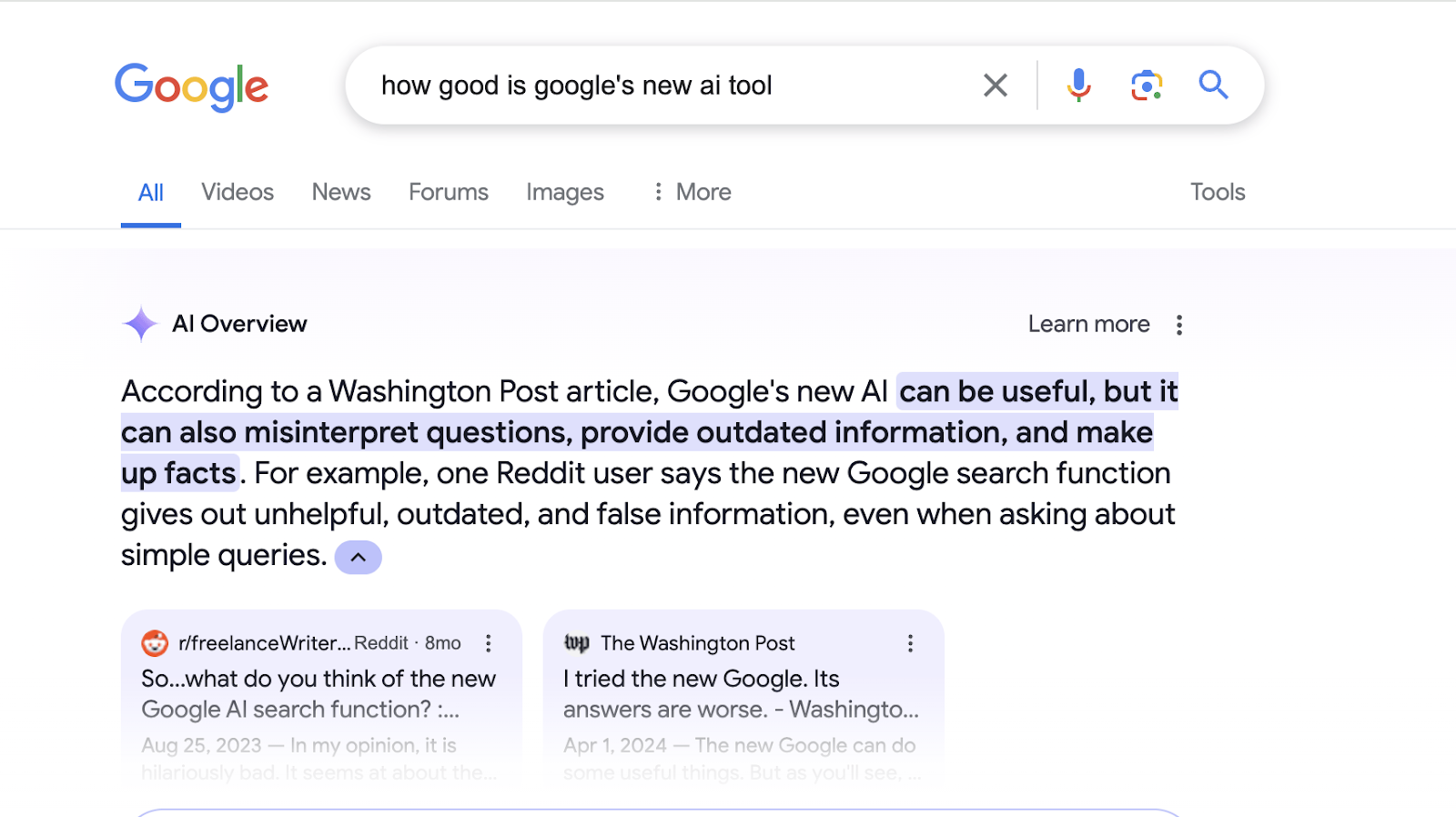
And this was only the beginning. Fast forward a few years, and even this monumental development is doing little to stop users from fleeing to LLMs like ChatGPT and Gemini. In the holiday season just gone, Adobe estimated that retailers could have seen up to a 520% increase in traffic from chatbots and specialised search engines when compared to the season before.
As much as the incumbents might have liked to stop it, Generative Engine Optimisation (GEO) is here to stay.
Survival of the most personalised: from SEO to GEO
In many ways, GEO is simply the next phase of SEO, and the core principles are largely the same. It’s all about gaming the system to anticipate the questions people will ask - thus positioning your content to feature in the answers.
But the tactics have changed. LLM algorithms follow an entirely different set of rules from the search algorithm of old. Where search engines used to prefer wordy content such as blog posts, chatbots favour information in a simpler, ‘browsable’ format like bulleted lists and FAQ pages. And, people ask them far more specific questions than they would have asked Google, making it harder to predict what search terms you should be optimising for.
So, we’re not being dramatic when we say GEO has flipped the script entirely.
What the rise of GEO means for brands
By this point, you’re probably wondering, ‘What does this mean for my brand’s Marketing and PR strategy?’
Well, lucky for you, we’ve already done a lot of the hard work for you.
We spent far more time than we’d ever like to admit over the last few months experimenting with various LLMs, seeing how they reacted to different prompts and different accounts, using our own brand as a test subject. And the results were…interesting.
You can delve into the full whitepaper for the details, but we’ll give you the headlines now (‘cause we’re nice like that).
- Safe just became boring: You guessed it, those tried-and-tested B2B Marketing tactics of old, such as gated content and keyword optimisation, simply didn’t cut through. The brands that followed these were left out of results, rendering them effectively invisible - and yes, we’re including ourselves in that (for the moment at least).
- Brands need to open up the content floodgates: We all love a bit of gated content for lead gen purposes, but locking your content up like this means that AI can’t read it. And what it can’t read, it won’t include in its results.
- Gatekeeping your news could create fake news: LLMs don’t just ignore content that they can’t read. More often than not, they just make up facts to fill in the gaps. So, gatekeeping your content could well be doing more harm than good.
- GEO has already become part of your marketing mix: Whether you realise it or not, your marketing mix is already feeding into LLMs. Once a user has interacted with a brand, no matter how lightly, their personal AI becomes biased in your favour.
There’s a lot more to learn, and we feel like we’ve only scratched the surface of GEO, but it’s already informing our strategies - as you’ll see, we’ve already ungated our content 😉, and we’ve got more changes in the works to ensure our presence in LLM results. Want to find out where you need to be a bit braver in order to catch AI’s attention? Get in touch 👋


.png)